
Means of payment in France
While shopping or travelling in France you have seen small posters saying “La maison n’accepte pas les chèques” (The house does not accept checks) and you wonder what this is all about? How to pay in France? Can I open a bank account in France? What information can a bank request from you? Can the lack of information about a customer or an unusual movement on the account justify blocking the account? How do you unblock an account? Explanations in this article.
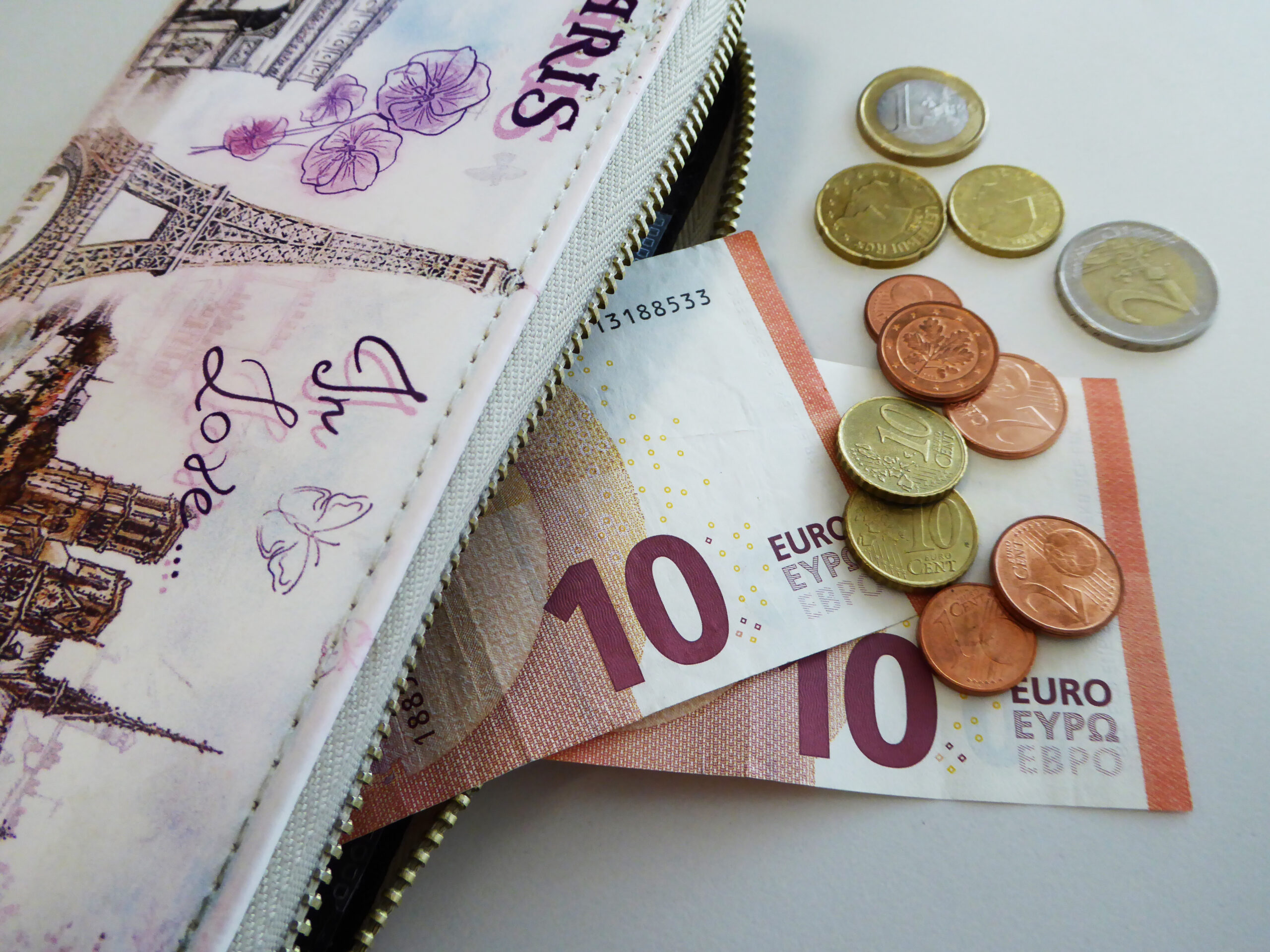
How to pay in France?
ATM withdrawal
According to the Regulation on cross-border payments in euro No 2560/2001/EC, banks have to charge cross-border withdrawals and payments by debit or credit card or bank transfer like domestic transactions (as long as the payment is under 50.000 €).
Cash payment
French residents for tax purposes or those who act within their professional scope are allowed to make cash purchases of up to the value of 1,000 euros (3,000 euros if you pay with e-money).
For tourists, as long as the purchase does not serve a professional activity, the limit is 15,000 euros. As long as the amounts to be paid are under these limits, the trader must accept cash. Above these limits, the consumer needs to use another payment method such as cheques or bank cards.
Good to know: These limits aren’t applicable if the buyer does not have another mean of payment or does not have a bank account.
Please note that the seller should ask you to present an ID (passport, driving licence) for every cash payment above 1,000 euros.
A trader can however refuse to accept more than 50 coins. Concerning bank notes their number is in principle unlimited. But as in principle, the consumer must pay the exact amount, the trader can refuse high-denomination bank notes if the price is much lower than the value of the bank note. A trader can also refuse damaged or stained bank notes, especially if the security features cannot be seen properly.
There are no restrictions on cash payments between consumers (such as for the purchase of a car), but if they exceed 1,500 euros, an invoice is required to prove that the payment was made.
Relevant legislation
Article D112 ‐3 of the code monétaire et financier and Article 1840 J of the code général des impôts ‐ sanction: up to 5 % of the amount paid if it exceeds the authorised limit. Both parties are responsible for the payment of the fine.
Attention: Cash payments at local government finance offices are limited to 300 euros. These include payments of VAT, income tax, local taxes, fees (e.g. audiovisual licence fee), fines, as well as hospital bills or rents paid to public institutions.
Card payment
The use of credit cards may not be as common as in many other countries. The most common bank card in France is not a credit card, but rather a debit card that deducts withdrawals and payments directly from the account balance (“carte bleue”).
In many shops and restaurants you will be able to pay with a Maestro, Master or a Visa Card. There might be a minimum amount, so you should always check before ordering. Indeed the trader can only refuse a payment by card if you have been prior informed about this. You may read signs saying “Paiment en CB à partir de 8 euros” for example. However, during the COVID-19 pandemic, consumer have been encouraged to use card payments even for very small amounts.
You may also be asked to prove your identity with your identification documents. In small towns or away from tourist areas, it is always useful to have some cash with you.
Good to know: Taxis in France should accept card payments.
Also, not all French card reading devices can read the magnetic strip on your card as French cards usually use computer chips which require a secret PIN code to validate all operations (cash withdrawals, payments in shops…).
Bank cards can be direct debit (the amount of money will be immediately withdrawn from your account) or deferred debit (withdrawal operations take place only once a month).
If you plan on buying petrol, make sure you have the right card.
The “chargeback” procedure for obtaining a refund
Have you paid by card for a purchase or a service to a seller in Europe who has not respected his commitments and who does not respond to your reminders? Is the product ordered on a Spanish site a counterfeit? Are you the victim of a subscription trap? In some cases, you can request a refund of amounts paid via the “chargeback” procedure. More information in our article on the chargeback procedure.
Payment opposition: what is it?
In principle, according to French law, you cannot revoke a payment order you made by card once it has been received. On the other hand, you can oppose a payment by card made in the following circumstances (article L-133-17 du code monétaire et financier):
- Loss or theft of your card,
- Fraudulent use of your card or its data, for example when you still have your card but its number and expiry date have been stolen and used fraudulently following a hack (more information in our article on card fraud). In this case, dispute the fraudulent debits in writing to your bank as soon as possible (upon receipt of the account statements) and at the latest within 13 months for a debit in the EU, Lichtenstein, Iceland and Norway or within 70 days for a fraudulent payment outside the European Economic area.
- Liquidation of the trader on the day of payment. Opposition is only possible as long as the transaction amount has not yet been credited to the trader’s account.
- If you have made a payment without knowing the exact amount and if the amount debited ultimately exceeds what you expected in view of the circumstances and the goods ordered or the service subscribed, for example if you have been the victim of a subscription trap. In this case, you must submit your request for reimbursement to your bank within 8 weeks of the debit of the sum.
Contactless payment
New EU rules (Directive (EU) 2015/2366) impose strong customer authentication. For in person purchases in shops, this means having to enter your PIN when paying by card. Whereas payments of less than 30 euros are exempt of strong customer authentication, banks will have to verify the customer’s identity when making more than 5 payments since the last authentification or if payments total 100 euros. This means, consumers makings repeated contactless card payments, will have to type their PIN for authentication purposes even if the shop accepts contactless payment.
However, since the coronavirus epidemic, the EU and many of its Member states encourage the use of contactless payment.
In France, the limit is 50 euros. But a new functionality called “Sans Contact Plus” aims at gradually removing this payment ceiling. Some payment devices already allow you to pay more than 50 euros without inserting your card. The only requirement is to enter the PIN code. On the long term, the objective is to offer contactless payment for all amounts. If the amount is below 50 euros, no PIN will be requested. If the amount is above 50 euros, a PIN will be asked.
Cheque
France is one of the last EU countries using this payment instrument. Banks provide to their customers checkbooks with 20 detachable cheques free of charge.
This means of payment is free of charge for a domestic transaction. However, there sometimes are very high transaction fees for cashing cheques from another EU country. Indeed the Regulation on cross-border payments in euro No 2560/2001/EC, which says that banks have to charge cross-border withdrawals and payments by debit or credit card or bank transfer like domestic transactions (as long as the payment is under 50.000 €) does not apply to payments made by cheque, as there is no central cheque clearing system within the euro area. Since they are no longer accepted as a method of payment in many EU countries, and given the important fees, it is strongly advised not to use them for any international payments within the EU.
If you are living in France and are in a possession of such cheques, you may pay your shopping with them unless the trader has informed you prior to your purchase via a sign or poster or so that they will not accept cheques « La maison n’accepte pas les chèques ». You may also be asked to prove your identity with your identification documents.
You should also know that a French cheque is valid 1 year and 8 days. It is strictly forbidden to write cheques if your account then becomes overdrawn. The cheque will be returned to your bank in full or partially and you will be forbidden to write another cheque on any of your accounts in any bank for the next 5 years unless you can correct the situation called “interdit bancaire”. You will be registered at the “Fichier Central des Chèques (FCC)” of the Bank of France.
If you do not respect this prohibition to issue cheques, this can be considered a criminal offence and you will be liable to penalties.
Bank transfer
This means of payment widely used in France enables an electronic transfer of funds from one bank account to another. It is most commonly used to pay a rent, or for instance to reimburse a friend.
This means of payment is harmonized in the EU under the name of Single Euro Payments Area (SEPA). This harmonization enables customers to make transfers to another bank based in the SEPA Area for the same fee as for a national/domestic transaction of the same value in euros if you indicate the IBAN (International Bank Account Number) and BIC (Bank Identifier Code) also known as SWIFT Code of the recipient in the transfer form.
Direct debits
This means of payment is generally used for recurrent payments such as electricity, gas, telephone and water bill payments. If you choose this means of payment, the initiator of the direct debit will require your approval by obtaining a signed authorization from you (“autorisation de prélèvement”) which you will send with your international bank details.
It is a common practice for some service providers (e.g. bills and regular payments such as rentals, insurances, electricity and gas, telephone, internet access, etc.) to require the payment by direct debit (“prélèvement automatique”). This is usually mentioned in the subscription service contract signed by the consumer.
Concerning rental agreements, imposing direct debit is a forbidden clause and considered as “unwritten” under the French law. So even if you have signed a contract containing such a clause, it has no legal value and you are entitled to use other payment methods. The French “Commission des clauses abusives” has asked to delete this clause in various contracts concerning different services.
Practical advice:
- If you do not wish to use a direct debit – for instance, if you are wary of potential errors – , and if you have a French bank account, you can use the payment slip TIP or “Titre Interbancaire de Paiement”) that is attached to most utility bills. A TIP authorizes the full payment to be deducted directly from your account and you do not need to send a check.
- If you don’t have and don’t want to open a French bank account, don’t forget that within the EU you can easily pay by bank transfer, which is free of cost within the EU.
- If you prefer to pay by direct debit, but from an account in your home country, you can use the Single Euro Payments Area (SEPA) direct debit. But please be aware that it is still common practice in France for many traders to ask for a direct debit only from an account in France. So you may have to insist on your rights in the Single Euro Payments Area (SEPA).
Complementary local currency
What exactly is a local currency? How does it work? Why was it implemented?
France has over 40 local currencies. Local currency has existed since 2014. They can only be used in a restricted area and are used to purchase a limited product range. Their purpose is to encourage local businesses. The key idea is to restrict the cash flow so that it only circulates within a specific local network of businesses. For example : you buy your bread at a local bakery with your local currency. Your baker receives the currency and buys his flour with the same currency, etc. This system favors shorts circuits and therefore the local economy.
Most currencies are created by associations, managing it with the help of a financial institution. The majority of them are printed, but some of them are shifting to digital currency. In some regions, you can also obtain a bank card to pay with a local currency. Please note that the local currency does not replace the use of the normal European currency, the Euro.
How to get complementary local currency (CLC)?
- Be a member of the association offering such a currency or ask them if you need to enroll, each association has its own personal operating mode;
- Exchange your euros for the currency. For most of them 1€ = 1CLC, but some localities decided to implement a bonus for the use of CLC such as 20 euros = 25CLC (the local authorities invest this money and complement the missing funds);
Where does the money exchanged go? The euros you used to exchange for CLC are kept in a bank chosen by the association as a guarantee of its value. Some localities use these funds to finance local projects.
Arriving with cash in France
You can enter France with 10,000 euros on you (cash but also any other value such as cheques, prepaid cards etc). Beyond this amount, you will have to declare these valuables to the customs.
You can declare your money:
- Online at the earliest 30 days before the date of transport of the cash and at the latest before crossing the border on the day of travel
- Or by a paper form (and 1bis Déclaration d’argent liquide UE-Feuillet supplémentaire) to the customs service, at the time of entry into or exit from French territory.
You might also be interested in
Funded by the European Union. Views and opinions expressed are however those of the author(s) only and do not necessarily reflect those of the European Union or the European Innovation Council and Small and Medium-sized Enterprises Executive Agency (EISMEA). Neither the European Union nor the granting authority can be held responsible for them.
Was this article helpful?