How much does it cost to withdraw money abroad?
As a French resident, you may withdraw money in other European Union countries under the same conditions as in France, thanks to the European legislation on cross-border payments. In some countries, however, charges still apply, particularly if the cash machine is not connected to a bank. Cash back also allows you take out a small amount of money when you make a purchase.
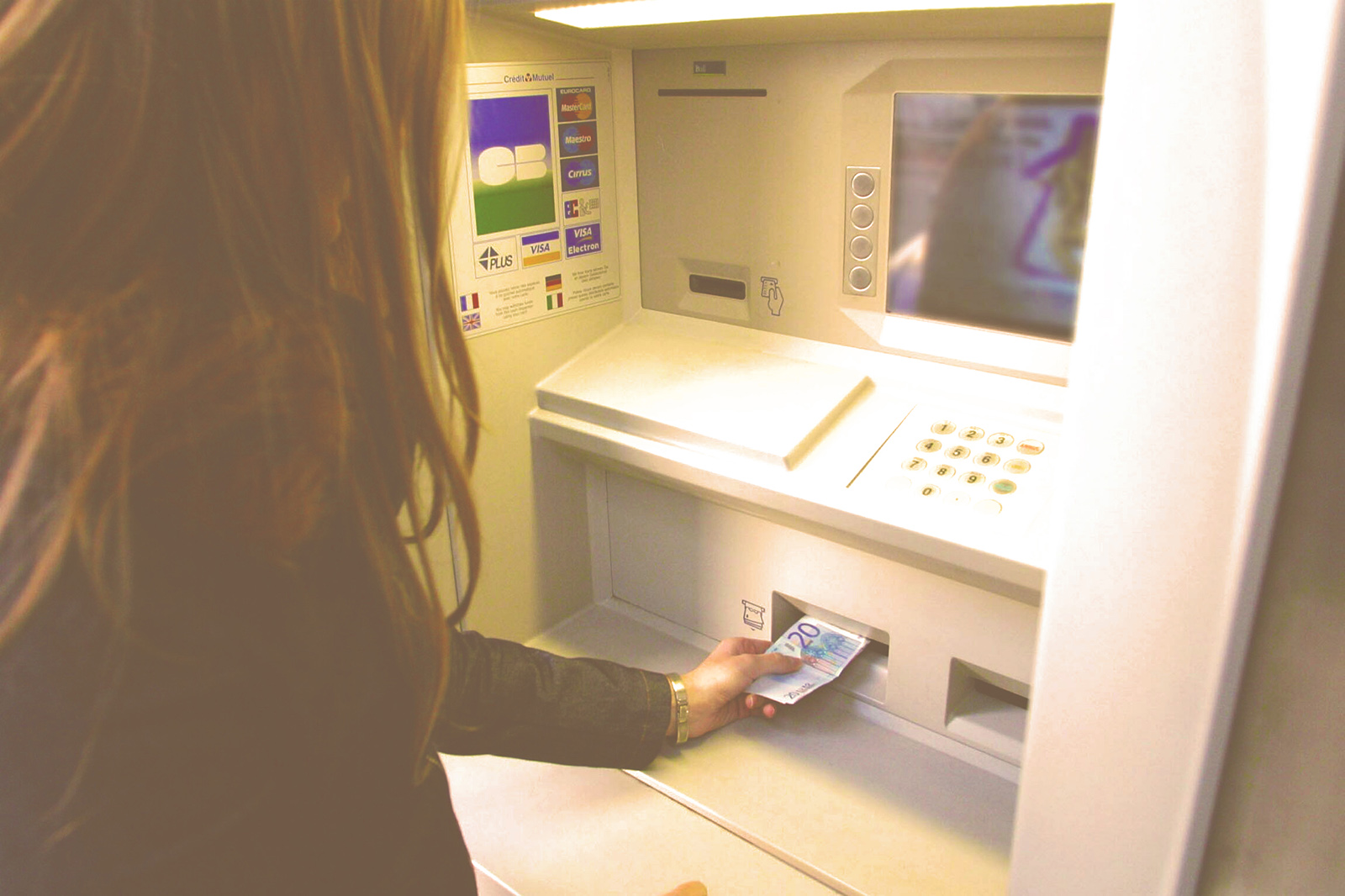
How much does a cash withdrawal cost in another EU country?
When travelling from France to another country you should have no problem withdrawing money. This is especially true if you have a French bank card or bank account. Usually, the card works abroad, however, there can be a cost.
Regulation 2019/518 on cross border payments offers some good news:
- If you withdraw cash in the eurozone, no additional charges are allowed. Your bank must charge you the same rates as you usually pay when making a domestic withdraw. So whether you are in Germany, Portugal or Finland, you can withdraw money from cash dispensers under the same conditions as in France. Generally, the first withdrawals are free of charge and then the bank charges you 1 euro for every following withdrawal. Make sure to always check your bank’s terms and conditions so there are no surprises.
- If you withdraw money in an EU country outside the eurozone (Bulgaria, Czech Republic, Hungary, Poland, Romania, Sweden), you will withdraw money in the currency of the country you are visiting. You will also pay a fee in euros at a sometimes expensive exchange rate. However, the machine must clearly inform you of these charges and the exchange rate when you withdraw cash.
Please note! If you withdraw money from an independent cash machine, it may charge a fee for using it. These are the machines that are not linked to a bank. You must still, however, receive notification of these charges before proceeding with the transaction. It can be a display on the screen or a sticker on the machine. The fee charged to a foreign customer may not exceed the fee charged for a ‘national’ withdrawal.
Once you have withdrawn cash, you can’t necessarily pay everything with it! There are limitations in some EU countries.
Withdrawal fees for using a debit card in Spain or Greece
In Spain and Greece, banks can charge you for the withdrawal of money when you use a debit card. In Spain, the bank can charge you a fee if you are not a client of the bank.
The cardholder is liable to pay charges to two different banks:
- Your own bank (depending on the terms and conditions of your bank card)
- And the bank where the actual withdrawal was made.
A new system helps avoid this situation. The bank where the cash withdrawal was made can no longer directly charge customers that are part of a bank authorized in Spain or dependant credit institution established in Spain.
Banks have reached an agreement on withdrawal and instead of charging the consumer, send the fees to the other bank. The bank issuing the bankcard can, however, send the withdrawal fee to the customer.
If the bank you withdrew from has charged you bank fees, it is most likely because the bank you withdrew from does not have an agreement with your bank. However, the amount of the charge cannot change depending on the origin of the bank issuing the card.
Advice:
- Report any incidents of inflated fees to organisations such as the “Banco de Espana”.
- You can use the FIN-NET network.
- Contact your bank to try and receive a reimbursement for your fees.
Is cash back an option for withdrawing money?
Introduced by the European Directive 2015/2366 on payment services, cash back is a way of withdrawing cash when making a purchase with a bank card.
These services already exist in several European countries like Germany, Poland, Sweden, Spain and Belgium. Since the implementation of a law in 2018, France has adopted this practice as well.
How does cash back work?
When you decide to pay with a bank card at a shop, you can ask the seller to increase the cost of your purchase. This allows you to receive the difference between the cost of the product and the amount you paid in cash. This bypasses the potentially costly process of taking cash out of a cash machine and allows you to get cash simply by receiving the change of a transaction.
Example: You must pay 10 euros for a product. You decide to ask the shopkeeper to charge 20 euros to your bank card. In the end, you receive 10 euros in cash.
Cash back allows you to withdraw money easily and allows shopkeepers to get rid of their cash in their tills.
Cash back in France
The practice of cash back in France is highly regulated. The law states that:
- Each business decides if they want to offer cash back, it is completely voluntary.
- Customers that wish to take advantage of cash back must be acting for themselves and cannot make the transaction while representing a business.
- You may use this service with the purchase of goods and services.
- This service only applies to card payments.
The terms and conditions for cash back in France are as following:
- The minimum purchase amount must be 1 euro.
- The highest cash withdrawal can only be 60 euros.
- The penalties for the failure to comply with these restrictions will result in a fine of 1 500 euros for individuals and 7 500 euros for legal entities.
Does cash back cost money to use?
Retailers can choose whether to charge for this service or not. Before using cash back, make sure to ask the seller if they charge for the cash back service. If they do, ask how much the fee is.
Cash back in Germany
In Germany, you can withdraw cash using cash back in grocers (Netto, Edeka, Aldi, Rewe, Norma …) in drug stores (DM…) or a service station (Shell…).
- The minimal purchase required depends on the business but it is usually 10 or 20 euros.
- The maximum cash withdrawal is 200 euros.
- To benefit from this service, you must enter your bank code while paying with your credit card. It does not work if you simply sign the receipt, which is common in German shops.
- Shops can charge or offer this service for free, often if you have a customer card with the brand. Above a certain purchase amount no charges apply.
The proposed draft Directive on Payment Services and Electronic Money Services in the internal market (PSD3) plans on bringing more transparency to ATM charges. If the directive is approved, payment service providers will have to disclose fees charged by all ATM operators in their Member state so that consumers can choose which one to use.
The directive also aims at making cash more easily available to consumers by facilitating purchase free cash backs.
Also more non-licensed ATMs will probably see the day of light. Consumers should then be very vigilant concerning fees.
You may also be interested in
Funded by the European Union. Views and opinions expressed are however those of the author(s) only and do not necessarily reflect those of the European Union or the European Innovation Council and Small and Medium-sized Enterprises Executive Agency (EISMEA). Neither the European Union nor the granting authority can be held responsible for them.
Was this article helpful?