
How to pay safely on the internet?
Before shopping online, make sure that the website is secure. Consider the different payment methods the online site offers. The EU has improved online shopping security with strong customer authentication. However, the “Buy Now Pay Later” option, which lets you buy items in interest-free instalments, still has its risks. Also, beware of purchases in an app or an online game!
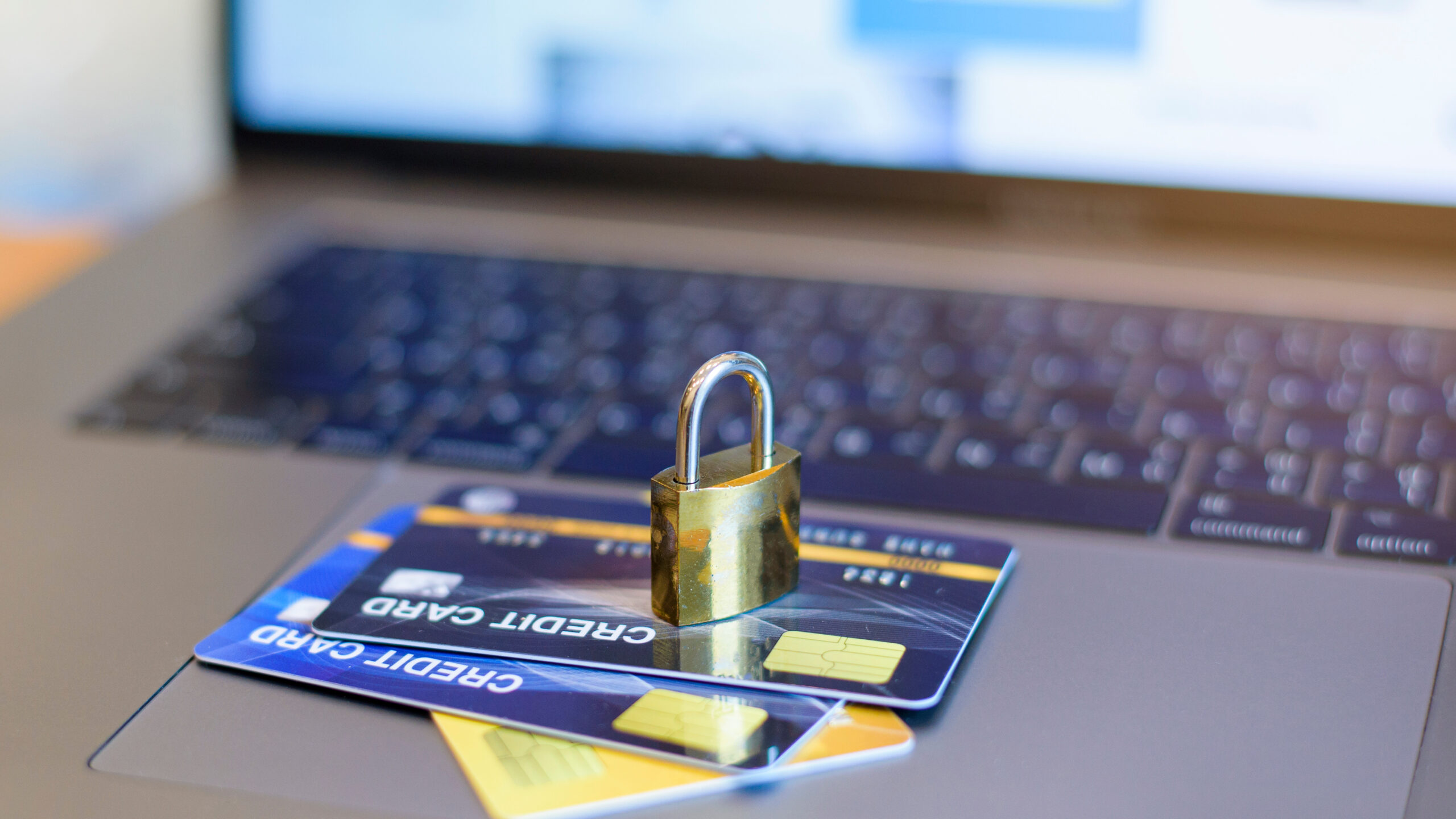
6 tips for safe online shopping
- Before paying online, ensure that the site is secure. Look for the acronym “https” (instead of ‘http‘) in the URL.
- Never sharethe number on the back side of your bank card with someone you don’t know!
- Always hide your bank codes especially when you type them and keep your bank card out of sight.
- Be cautious about saving your bank details for online shopping sites.
- Don’t buy products from sites that advertise products that are much cheaper than their competitors.
- If you run into problems contact your bank to dispute the transaction.
Look for strong authentication measures!
As a French resident, you need to give your consent before buying using the “valid customer authentication” system. This is an EU-wide obligation to fight against fraud and to secure online payments.
To pay online, access online banking, validate a bank transfer or any other online financial transaction, you need to prove your identity. You must also go through two different authentication processes.
- Enter something that only you know (password, secret code, secret questions etc.).
- Use another device (a text on your phone, a scannable code on the seller’s page with another device).
- Prove your identity by a personal characteristic (fingerprint, facial or vocal recognition or any other biometric fingerprint).
Sometimes, it happens that you pay on a website without strong authentication systems. In this case, the seller is responsible of reimbursing you for any amounts taken without your permission or acknowledgement.
Strong authentication systems are not required for:
- Payments less than €30 (€50 for contactless payments).
- Payments that are made in a maximum of 5 successive instalments or if the cumulative amount does not exceed €100 (€150 for contactless payments) .
- Payments to someone who is considered a beneficiary and is predetermined as trustworthy. The bank can refuse to trust this beneficiary if they believe them to be untrustworthy.
- Low-risk transactions between €30 and €500 or transactions where the fraud rate, calculated by the beneficiary’s or issuer’s bank, is below a certain threshold. Up to 120 different pieces of information are used to assess the risk of transaction such as invoice, name of products purchased, IP address of which the computer from which the order was placed, device used etc.
- Payments from automated machines such as car parks for toll booths.
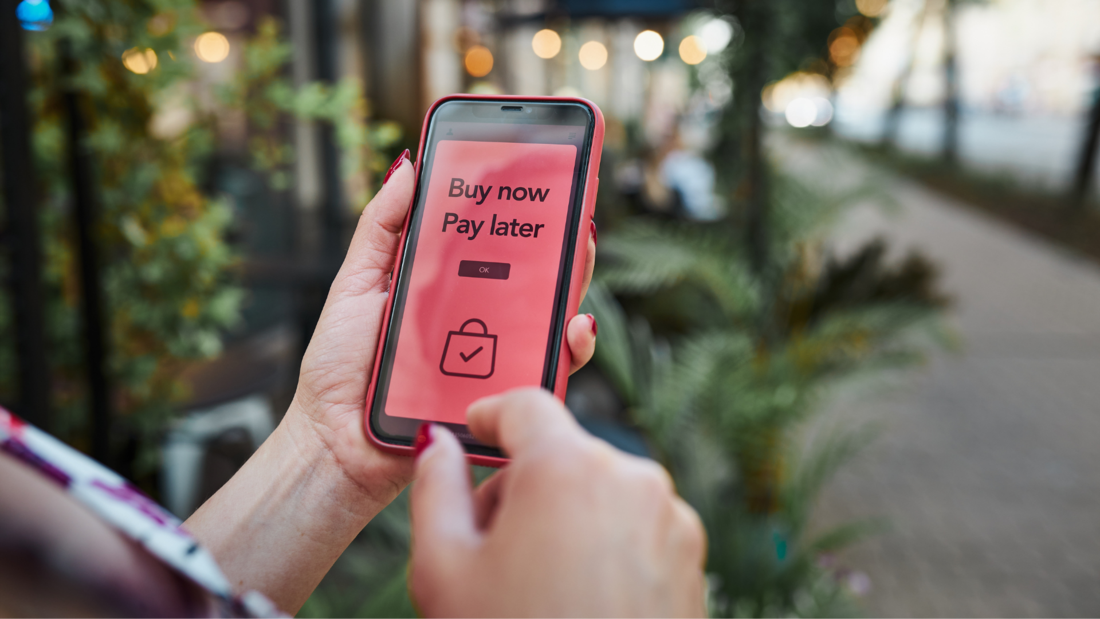
Risk of paying in instalments or ‘Buy Now, Pay Later’
More and more online sellers are offering to pay in instalments. To do this, they entrust the management of your payments to financial institutions or service providers, both French and foreign.
The idea is simple: the intermediary immediately pays the seller the price of your order in return for a commission. Then the intermediary collects money, in instalments, from the bank account connected to your bank card.
This is a win-win solution for both the intermediary and the online seller. But for the consumer, paying in instalments is not covered by the same protective laws as normal online purchases. Also, the seller doesn’t have to check your ability to fully pay the amount due before completing the purchase. Lastly, there is no limit for late payment fees which can lead to much larger fees if you do not make the original payments on time. This means that the consumer can become more and more in debt, especially if their income is low.

New laws starting end of 2026
To protect the consumer from the risks of paying in instalments, Europe has decided to revise the Consumer Credit Directive. In 2023 they adopted a new proposal that will be put into effect by EU Member states during autumn 2026.
Following this directive:
- Consumers will be better informed about the real cost of credit.
- Money lenders must evaluate the consumer’s ability to actually make their credit payments on time.
Consumers benefit from a right of withdrawal, which allows them to change their mind during the first 14 days for any credit purchase.
Advice before opting for paying in instalments without charge
- Educate yourself about the intermediary of the payment and the fees that are applied in case of a problem.
- Know that only the online seller is responsible for problems with your order, not the intermediary who you are paying the money to. Contact the seller if you do not receive your order or your refund if you decide to cancel your order.
- If you can’t find a solution with the seller, contact the intermediary who is in charge of the payment. You can contact the entity that is in charge of the refund process as well.
- If you can’t find a solution with the seller or the intermediary, try to go through the process of chargeback with your bank to get a reimbursement.
- Contact us if you live in France and the seller is based in another EU country, Iceland or Norway as a last attempt at finding an amicable solution.
Unauthorised purchase by a child on an app or online game: What should you do?
If your child is playing an online game on your cell phone and purchases something, it will not be easy to cancel the purchase and get a refund.
In France, a purchase by a minor is valid if it is considered as a normal purchase
In France, the rule is that every purchase by a child under 16 years old must be allowed by a parent. If this purchase, however, is reasonable for the financial situation of the minor, conforms to his/her daily habits or habits of other people of the same age, it can be considered as a “normal purchase”. In this case, the parents cannot contest the purchase.
Examples of purchases by minors that can be considered as everyday purchases:
- Purchase of an emote for a video game character;
- Purchase of music on an online platform such as Apple Music, Youtube Music etc.
Examples of contestable purchases by minors:
- Buying virtual money or online sports betting by a child;
- Purchase of an accessory for a video game character by a 3-year-old on his/her parents phone.

Best practices in Europe
In Austria, every purchase by a child under 7 years old is unvalid. From the age of 7-18 every purchase that is worth more than the money the child has can be contested by his/her parents if they don’t support the purchase.
In Germany, children less than 7 years old cannot freely make purchases. Also, children may not use their own money for an online purchase unless they have their parents’ permission.
In Ireland, minors can make purchases of necessity (clothing, food etc.). Other purchases are considered on a case by case basis and their validity will depend on their benefits for the child.
How to request a refund for a purchase made by a child?
- First, use the 14-day right of withdrawal. However, if the purchase or service is immediately used it will be impossible to receive a refund. The only option for parents, in this case, is to request that the contract be declared null and void. Make sure to check the general terms and conditions of sale. They may indicate whether the seller authorises withdrawal specifically for a purchase made by a child.
- Contact the website to try and find an amicable solution. Alternatively, contact a consumer association or a mediation service to help you with your complaint. If you live in France and the website is based in another EU country, Iceland or Norway please contact us.
- If you are unable to find an amicable solution you can bring the matter before the appropriate court. The chances of your appeal succeeding depend on the judge’s interpretation and the context of the purchase your child made.
How to protect your child from purchasing something online?
- Don’t save your bank details on your phone, computer, video game console, or any online platform. Even if this simplifies payments in the future it also risks purchases that you do not necessarily want.
- Contact your bank to find possible strong authentication methods for payments.
- Pay attention to your recent bank transactions on your bank account website or app.
- Pay attention to sale history on your mobile device or your child’s gaming console.
- On the platform where the game or app was initially downloaded from (Play Store, App Store, etc.) or in the intermediary payment settings (Google Pay, PayPal, Amazon Pay etc.) tick the box preventing automatic payment using the pre-registered payment method.
- If your child uses their own device, make sure to activate the parental controls provided by the service.
Beware loot boxes!
In a video game, your child may be tempted to “open” a special loot box. This virtual object, usually in the form of a chest, offers players improvements for the game. Be careful because these chests can be free but more frequently are only available by purchase.
In France, no laws apply to the selling of loot boxes. However, Belgium and the Netherlands have decided to ban them. At the European level, the European Commission published a fitness check report arguing for a stricter regulation of loot boxes. They recommend enhancing transparency, which includes displaying probabilities of winning specific rewards and showing the real-world costs when virtual currencies are involved.
You may also be interested in
Funded by the European Union. Views and opinions expressed are however those of the author(s) only and do not necessarily reflect those of the European Union or the European Innovation Council and Small and Medium-sized Enterprises Executive Agency (EISMEA). Neither the European Union nor the granting authority can be held responsible for them.
Was this article helpful?