Can I open a bank account in France?
Updated on
17 July 2024
As a French resident, you have a right to a bank account free of charge (or for a reasonable fee) and with all basic features. If a bank refuses to do so, you can refer the matter to the Banque de France, who will designate an institution which will have to open your account.
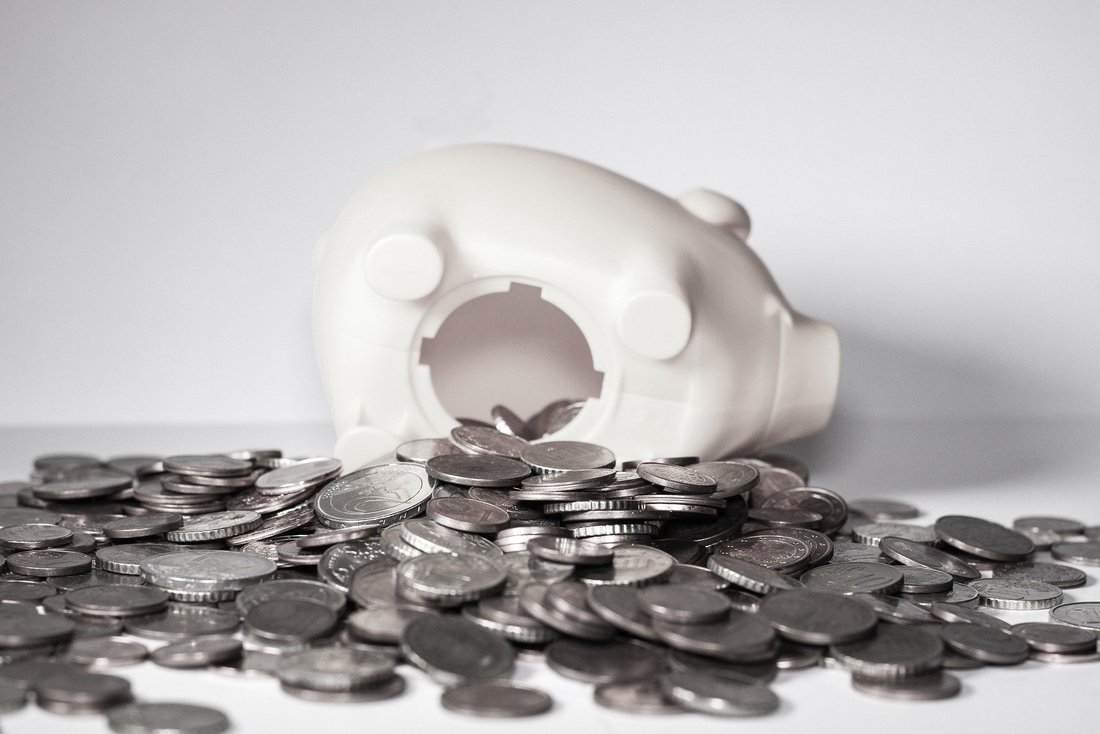
You have the right to a French bank account if you live in France. © kschneider2991
Which services are considered basic banking features
- A payment card with systematic authorisation (possibility of online payments and cash withdrawals in the EU) ;
- The cashing of checks and transfers ;
- Payments by SEPA direct debit, SEPA TIP or SEPA bank transfer (over the counter or remotely for the transfer) ;
- Means of remote consultation of the balance of the account and the monthly sending of statements of account ;
- Cash deposits and withdrawals at the counter ;
- Two bank cheque forms per month or equivalent means of payment ;
- However, there is no checkbook, nor any possibility of authorised overdraft, within the framework of these basic banking services.
Conditions to fulfil
- You are a French national living abroad or a foreigner legally residing in a European Union country other than France ;
- You do not already have a deposit account in France ;
- The right is also applicable if you are overindebted, or baned from banking (“interdit bancaire”) ;
- You have received a refusal by a bank. Always ask the bank to provide justification: Indeed a bank has the right to refuse you the opening of a bank account, but it must then provide free of charge a certificate of refusal to open an account and indicate its reasoning.
Procedure to follow
- We would recommend that you express your wish to open the account in writing, ideally be registered letter, and keep a copy of your letter.
- If, after having expressed the wish to open an account with a banking institution you receive a refusal or you do not receive a reply at all within 15 days, you can refer the matter to the Banque de France.
- You will need to provide at least :
- A proof of refusal or your letter or, if it remained unanswered (dating back more than 15 days), the acknowledgement of receipt or the proof of deposit to the bank ;
- The completeted application form of the Banque de France (in French) ;
- Your official ID ;
- A proof of address less than 3 months old ;
- Which bank you would like, even if it might not be the one the Banque de France will designate, and the geographical area.
- Once the Banque de France has received all necessary documentation, it will designate within 24 hours a bank which will be required to open a deposit account for you, free of charge. This designation is valid 6 months and both you and the bank will be informed about the name of the bank.
- A maximum of three days is allowed for the bank designated to inform you of the supporting documents required to open the account.
- Once you have received the designation letter, you have 6 months to take the necessary steps with the designated bank.
- You must then contact the bank, and if you have provided all documents, the bank has three days to open the account. Usually you will have to be present to finally open the account.
- Keep a record/copy of all documents submitted to the bank.
Banking, payment services, neobanking, fintech… what are the differences?
- A bank, like a credit institution, is an undertaking whose business is to receive deposits or other repayable funds from the public, to grant credit for its own account and to provide payment services (means of payment, credit transfer, direct debit, deposit of money, withdrawal of money from accounts, etc.). More information in the Payment Services Directive (PSD1) 2006/48.
- Online banks are banks whose accounts are managed exclusively through the Internet. Some online banks are backed by traditional physical banks, others are not. They generally offer a wider range of products than neobanks (life insurance, stock market, savings accounts, etc.).
- A neo-bank is a bank where all operations are done via your mobile phone. 100% mobile banking solutions exist in France, Germany, Lithuania and many other European countries. In principle, only credit institutions can be called “neobanks” in France. But many payment service providers are wrongly called so on the Internet.
- Payment Service Provider: an institution that issues and manages electronic money and provides payment services (e.g. for online purchases). More information in the Directive 2007/64/EC (PSD2).
- Fintech: Contraction of “Financial” and “Technology” (financial technology). This term refers to companies providing financial services through innovative solutions in mobile payment, savings, insurance, credit, online financial advice, crowdfunding… This includes neo-banks, neo-insurance, and other online financial players.
You might also be interested in
Funded by the European Union. Views and opinions expressed are however those of the author(s) only and do not necessarily reflect those of the European Union or the European Innovation Council and Small and Medium-sized Enterprises Executive Agency (EISMEA). Neither the European Union nor the granting authority can be held responsible for them.
Was this article helpful?