
Driving a car in France
If you live in France and drive a car, it is essential to familiarise yourself with basic traffic and safety regulations, particularly those regarding parking or drunk-driving. Additionally, if you get or already have a French driver licence, the French point system for traffic violations will apply to you.
Basic traffic rules
The “priority to the right” rule applies unless there is another road sign that gives you priority.
Good to know: You can find an overview of the main driving rules in France on the site of the European Commission.
Take your foot off the accelerator on two-way national and departmental roads
Some French departments have lowered the speed limit on two-way national and departmental roads from 90 km/h to 80 km/h. This applies to approximatively 400 000 km of roads. Check the road signs to know the exact speed limit.
Pedestrian crossing: a fine of 35 € in case of non-compliance with the “buffer zone”
French cities can establish “security buffer zones” in front of pedestrian crossings. This new “buffer zone” does not function as a “stop”; drivers do not have to stop if no pedestrian is crossing or shows an intention to cross. However, failure to comply with the new markings or not yielding to pedestrians clearly showing the intention to cross will result in a fixed fine of 35 euros.
Since September 2018, refusal to give way to a pedestrian who crosses or shows an intention to cross on a marked pedestrian crosswalk is subject to a fine of 135 euros, a withdrawal of 6 points on the drivers licence, and a license suspension of up to 3 years.
Lane splitting allowed for two-wheeled and three-wheeled vehicles
Lane splitting is when a motorcycle or a bike drive between two lanes of stopped or slowly moving cars. Since 2025, France has decided to generalise lane-splitting.
Only motorised two-wheeled or three-wheeled vehicles less than one metre wide may split lanes. They can do so when traffic is heavy and there is sufficient space between the two unbroken lanes located furthest to the left. Motorcycles and bikes must drive at a speed of 50 km/h maximum if cars are still moving, and at a speed of 30 km/h if one lane is stationary.
Before lane splitting, the drive must signal their intention to other road users!
Driver licence & point system
When to change your licence
If you move to France from another EU Member state, you do not need to apply for a French driver’s licence. Your valid EU or EEA licence allows you to legally drive in any EU Member state. However, if you committed a driving offence while living in France with an EU driver licence issued outside France, you will have to swap your driver’s licence for a French one.
If you have a French driving licence, you can make it digital!
Since February 2024, a new digital format is available for the French driving licence. In addition to your licence card, you can have a digital version on your mobile phone, which you can use for police controls and to avoid loss or theft. Here is how it works:
- Download the app “France Identité” and set up an account.
- Import your ID card in the app.
- Scan the QR code for the restricted information statement, which you can find on mespoints.permisdeconduire.gouv.fr. Then, you can download your digital licence and keep it in the app.
The point system
The French driver’s licence works on a point system starting with 12 points. New drivers, however, only have 6 points. If they don’t commit traffic violations, they get two more points every year and reach 12 points after three years.
If you commit a traffic violation in France, you may lose points. Once you lose all points, your French licence will be revoked. However, this point system doesn’t apply abroad for drivers with a French licence.
How to check your point balance
If you wish to check the point balance of your French driver’s licence you can:
- Go directly to the Prefecture and present a copy of your driver licence and an identity document (ID card, passport);
- Write to your local Prefecture including copies of your driver licence, ID card or passport as well as a registered mail envelope with postal fees and a postal receipt (so that you can receive all information available by registered mail);
- Go online: connect with a file number and a personal code delivered either in the full statement by the Prefecture or mentioned in the registered mails sent by the “Ministère de l’Intérieur” with reference 48N or 48M – if you committed an infraction (loss of 3 points or more).
- Receive an e-mail or an SMS: since 7th October 2015, every French driver can automatically receive the point balance via electronic message. The driver only has to subscribe to an account on the French Ministry of the Interior road safety website.
To know when you risk losing points, refer to Main infringements and traffic fines in France.
If you are Ukrainian and come as a tourist or intend to say less than 3 months, you can drive in France with your original valid driving licence, accompanied by a translation or an international driving licence. The translation of your driving licence must be done by an approved translator.
If you later settle in France, you must exchange your licence for a French driving licence in order to be able to continue driving in France.
Indeed, your Ukrainian licence is only valid for 1 year after you get a house/apartment in France.
Good to know: you can never get the point balance of your French driver’s licence by a call!
A change of the point balance of your driver’s licence can only be made by an official letter which notifies the lost or the regain of points.
Therefore we advise you not to answer calls arriving on your mobile phone which informs you about an update of your point balance.
Car insurance and car accident

Petrol and electric charging stations
Petrol
Generally, fuel is more expensive along the “autoroutes” than at supermarkets.
Gas equivalence in France, the UK and Germany – respectively:
- FR : Sans plomb, 95 ou 98, Gazoile, GPL
- EN : Unleaded gazoline, 95 or 98, Diesel fuel, LPG
- DE : Bleifreies Benzin, 95 oder 98, Diesel Kraftstoff, LPG
You can usually pay with credit cards. Generally, you can pay at a booth, or by inserting your card into the machine near the pumps. Please note that small 24h petrol stations may not accept all foreign credit or debit cards at the automatic machine near the pump.
Electric charging stations
If you have an electric vehicle, you can charge it at one of the 100 000 stations available in France. All petrol stations on French motorways have a charging station. You can also find some on secondary roads and at holiday locations (hotels, restaurants and hypermarkets).
During summer, drivers can rapidly line up to recharge their vehicle! Near tourist sites, think about booking the charging slot in advance.
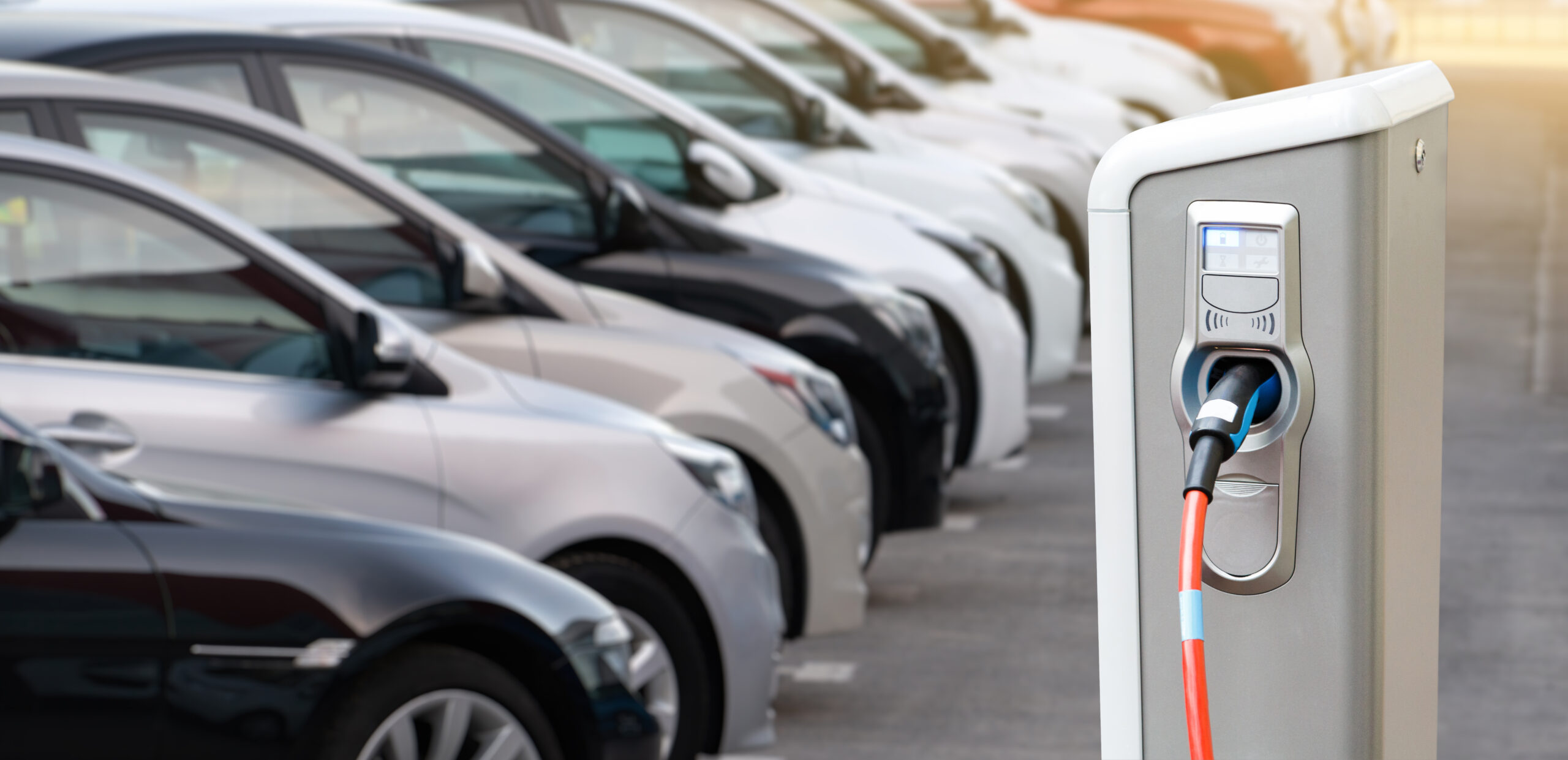
The power of charging stations in France can vary. Some have a limit of 150 kW whereas others exceed 300 kW.
To locate electric charging stations nearby, you can consult an interactive map. Electric vehicle providers integrate their own route planner to the dashboard, but you can also resort to collaborative route planner apps. Here is an example of an interactive map supported by the government: Traffic – electric charge – Bison Futé (bison-fute.gouv.fr)
You can also find location maps for the various French regions on the respective tourism websites.
Good to know: not all charging stations provide a charging cable.
How to pay? Not all charging stations offer a payment terminal for credit card. Usually, you have to pay using a banking app or a subscription card acquired from a charging provider.
Beware of tolls abroad!
Since 19 October 2021, EU Member sates have been able to exchange information on drivers in the event of non-payment of road tolls (European Directive 2019/520). ECC France receives more and more complaints about unpaid tolls in Italy, Portugal or the UK.
In Portugal, you can pay your toll either in cash or by bank card, or electronically. There are 4 ways of paying electronically:
- EASYTOLL: payment by automatic debit from your bank card – only for “electronic” tolls.
- TOLLCARD: payment by prepaid card – only for “electronic” tolls.
- VIA VERDE : the Portuguese equivalent of the French Télépéage.
- Fulli / Bip and Go / Ulys : private French operators offering boxes and subscriptions valid in France, Portugal, Spain and Italy.
If you fail to pay the electronic toll, you must contact the company operating the section of motorway used:
- A22 e A28 : vialivre
- A33, A8 – A19 / Pousos, A19, A4 – Vila Real-/ Bragança (Quintanilha), A23 – Abrantes / Guarda : Pagamento de Portagens
- A4 – Sendim-/ Águas Santas (A3), A4 (Túnel do Marão), A13 – Atalaia (A23) / Coimbra Sul, A17 – Mira / Aveiro Nascente (A25), A23 – Torres Novas (A1) / Abrantes), A24, A25, A29, A41 – Freixieiro (A28) / A42 e A42 : Ascendi
In the case of a rental car, either the hire company will provide you with a Via Verde badge, or you will have to pay the electronic tolls at a CTT post office (please have the registration number of the hired vehicle ready). You can pay from the second day after passing through the tollgate and for a period of 5 working days.
For more information, visit the French Ministry of Foreign Affairs website or the Portugal Tolls website.
On some motorways in Italy, there are no barriers. You can therefore drive through the tollgate without physically paying there.
On other motorways where there is a barrier, for safety reasons the barriers always open after a certain time, whether you have paid or not.
You may therefore receive reminder letters for non-payment of a motorway toll from a collection company several months after your journey, usually with surcharges.
How do I pay a toll in Italy?
Several methods of payment are available, depending on the lane you choose when you arrive at the toll station:
- Cash payment
The passages are announced by a sign showing coins and notes on a white background (cash payments).
- Payment by bank card or viacard
A blue sign indicates the lanes. The viacard is a prepaid card that you buy and credit in advance from the motorway infrastructure management company.
- telepass automatic payment
A yellow sign indicates the lanes. This system allows you not to stop. All you have to do is pass through the gate at less than 30 km/h and the payment method associated with your season ticket is automatically debited (if you have a Telepass season ticket). Don’t use this lane if you don’t have a Telepass!
- Auromatic payment « freeflow »
Some Italian motorways have cameras that photograph your number plate and vehicle category to calculate the user charges due. This system is advertised on the motorways concerned by a white sign with a green box in the middle showing the pictograms of a car, a camera and the euro (€). People who do not have a Telepass subscription, which guarantees automatic payment, have 15 days to pay for their journey. They can do so via an online credit card platform, at one of the service areas indicated on this site or via an app developed for this purpose.
What should I do if paying at the toll barrier doesn’t work?
It may happen that a toll station doens’t accept card payment, even though the card is valid. It will then issue a receipt with the words “Mancato pagamento“, which means “not paid”.
Don’t throw the receipt away! You will have to pay the toll later.
To pay the toll, you can :
-
- go to the “Punto Blu” motorway service points located at the major rest areas along the motorways.
- pay online, by card or bank transfer, within 15 days via the Autostrade website.
Do I have to pay the fine for not paying the toll?
If the offence is real, it is better to avoid reminders or not to react. In theory, prosecution is possible, with surcharges.
Under Italian law, the time limit for bringing an action for an unpaid toll is 10 years.
It is always possible to contest the fine in accordance with the procedures set out in the letter received from the authority or the collection company.
There is a congestion charge in London. The zone in question can be seen by clicking here.
This toll costs £15 and you can pay it before crossing it, on the day or by midnight on the third day after the journey on this website.
If you fail to pay the congestion charge, you may receive reminder letters from a debt collection agency.
The fine for non-payment is :
- 90 £if paid within 15 days,
- 180 £if paid within 15 to 27 days,
- 270 £if paid after 28 days,
It is always possible to lodge an objection via the Transport for London website or the debt collection agency’s website.
Good to know! If you are living in France, a French collection company can only claim the amount of the initial fine. They must not charge you any additional fees.
Safety measures
- Safety belts are compulsory for all the occupants of the vehicle that is to say for both front- and rear-seat passengers. There must be one safety belt per passenger. In the event of a police check, there will be a fine of 150 € for anyone not wearing a safety belt.
- Children must be at least 10 years old to sit on the front seat. Under the age of 10, children must be seated in the rear and, as would be the case in the front, use a seat belt or an approved child seat.
- Mobile telephones may not be used while driving, nor should earphones or Bluetooth kits. In the case of a police check, you may be fined up to 135 € and the loss of 3 points (if you have a French driver’s licence).
- Since the 1st of January 2013, all users of two-wheeled vehicles for which the engine size exceeds 125 cm3 have to wear specific clothes including retro-reflective equipment (sanction: fine of 68 € and loss of 2 points if you have a French driver’s license).
- Your car has to be equipped with a warning triangle and a fluorescent safety vest for a better visibility in case of breakdown or accident.
Note: The non-respect of the obligation to have a warning triangle and a reflecting jacket can be fined 135€. Cyclists have to wear it permanently when cycling by night outside agglomerations.
Find out if you need winter tyres in France.
Alcohol & drugs
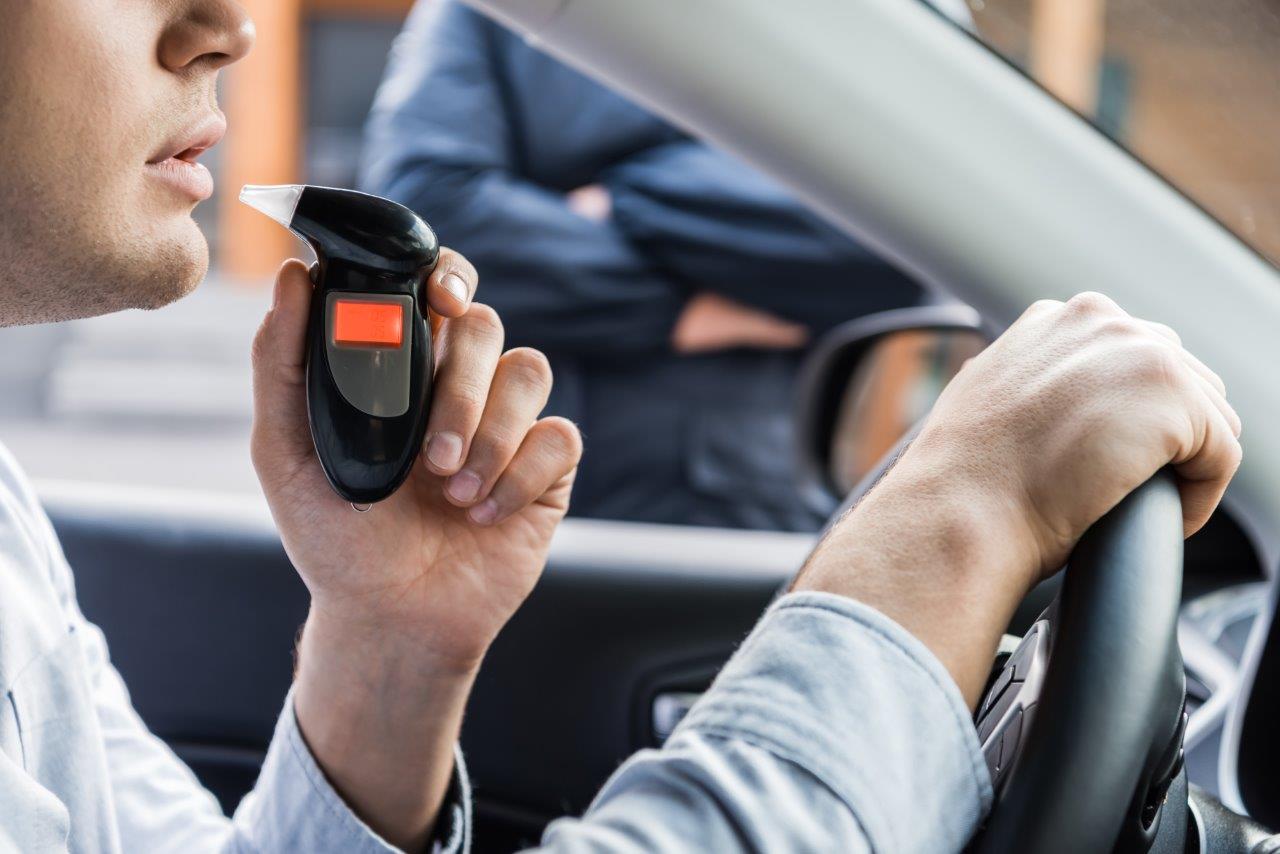
- France has very strict rules concerning drink-driving; the legal blood alcohol limit is 0,5g/l of blood. If during a police check, they find your level of alcohol between 0,5 and 0,8 g, they may fine you up to 135 euros.
- If the level exceeds 0,8g/l, the punishment is 2 years in prison and a maximum fine of 4.500 euros.
- The police also have the power to search for drugs. The smallest trace of illegal drugs can result in punishment. If they detect banned narcotics, the penalty could include 2 years in prison and a 4.500 € fine.
- If the blood alcohol level exceeds the legal limit, and the police detect the presence of drugs, the penalty could include 3 years in prison and a 9.000€ fine.
- In any case, if the 0,5g/l limit is expired, the police may seize up your driving licence (up to 3 years) as well as the vehicle.
- Every driver of a motorized land vehicle, must possess a single-use, unused and immediately available breathalyser (“éthylotest”).
Only two-wheeled vehicles with a capacity not exceeding 50 cm3 and 45 km/h are exempt from this obligation.
It is possible to get a breathalyser in most drugstores in France. You may want to purchase more than one breathalyser. A fine of 11 euros is applicable to any driver not carrying a breathalyser.
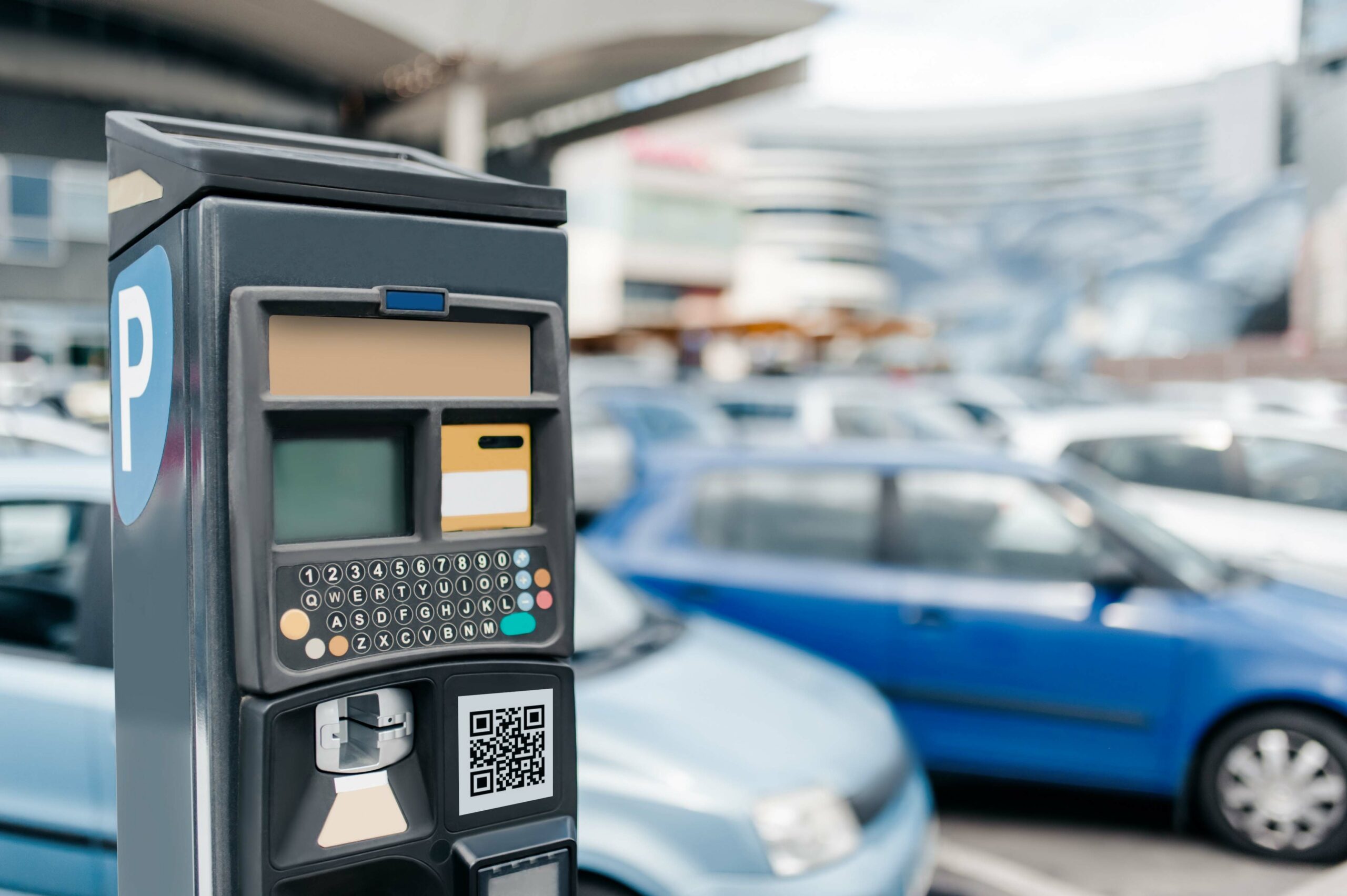
Parking in France
- Parking ticket machines (“horodateurs”) are common throughout France, although their number is diminishing. In larger cities and especially in Paris, these ticket machines work with credit cards or coins. Unless indicated otherwise, parking is free of charge from 7pm to 9am and on weekends (Saturdays and Sundays), public holidays. Smaller towns often offer free parking from noon to 1.30pm. You can find the tariff and time limit on the machine.
- Smartphone parking apps also allow you to pay for parking, sometimes even replacing the ticket machines. Several apps exist, it is up to you to choose one when visiting a city in France. You will need to set up an account and put in your licence plate number. When you use a parking app, you can adjust your exact parking time directly on the app. However, check beforehand if the app charges transaction fees or sending a text confirmation. If so, using the app may be more expensive than paying at the machine.
- Some cities also operate with disc-parking or “zones bleues” where you will have to display a parking disc or clock disc showing your time of arrival. You may then have one or two hours of free parking time, depending on the city and zones.
Important: illegally parked vehicles may be wheel-clamped or towed.
In France there is the post-parking fee (FPS) which replaces the €17 fine for unpaid or insufficiently paid parking. The amount of the FPS varies from one commune to another. You must pay within 3 months, or you can contest your fine via the government website if a telepayment number appears in the fine you received.
SUV parking in Paris
Since October 1st 2024, SUV owners must pay 18 euros an hour to park in the 1st to the 11th arrondissements and 12 euros an hour in the 12th to the 20th arrondissements. This tax affects cars, with hybrid or combustion engines, that weigh over 1.6 metric tons. Electric SUVs also pay the surcharge if they weigh over 2 tons. Paris residents, individuals with disabilities (reduced mobility), and those holding a mobility inclusion-parking card are exempt from this tax.
Be careful if you have a parking card from another EU country! France has replaced the EU card by a mobility inclusion card. However your old card should remain valid until the expiration date if prior to end 2026. Make sure that you display your parking card at the front of the vehicle and that it is clearly visible.
Two-wheeled vehicles
Since 2017, a new plate size has become compulsory for motor vehicles with two or three wheels and for quads.
Consequently, any motorbike, tricycle or quad owner registered in France should now have a registration plate which fits the new regulatory size of 210×130 millimetres. Users of such vehicles with nonconforming, illegible, removable or improperly positioned plates, risk a fine of 135 euros.
This single plate size concerns (brand) new vehicles, second-hand vehicles, as well as already registered vehicles. France standardizes registration plates in order to simplify police control and implement an equal treatment when it comes to radars.
Good to know: all vehicles registered in France, regardless of their type, are registered in the new Vehicle Registration System (SIV), replacing the former French registration system with numbers for each department. The new SIV plates follow the following pattern: 2 letters – 3 numbers – 2 letters (for instance, AM-961-AJ).
To know more about the main traffic offences in France, see:
Funded by the European Union. Views and opinions expressed are however those of the author(s) only and do not necessarily reflect those of the European Union or the European Innovation Council and Small and Medium-sized Enterprises Executive Agency (EISMEA). Neither the European Union nor the granting authority can be held responsible for them.
Was this article helpful?